Bioart is one of the artistic areas that has surprised us most at Technarte. Living organisms, biological processes or various types of biotechnology can form part of a work of art and even constitute it entirely. Paint or pixels can be replaced by cells, tissues, bacteria or elements from nature, thanks to creative tools and artists and researchers with great imagination and talent.
What defines bioart?
Bioart is an artistic discipline that draws on biology, but it does not have a single, definitive definition. Nevertheless, we can identify certain common features found in all works belonging to this category:
- Working directly with living material: cells, tissues or microorganisms are cultivated and manipulated to create the artwork.
- Using biological processes as a source for other systems: biological data or natural energy are used to power digital or interactive installations.
- Reflecting on science and ethics: many projects spark a critical conversation about biotechnology, the future of medicine and our relationship with living systems.
As with many of the other themes featured at Technarte, bioart requires academic training that enables new perspectives to be brought to research. It is a comprehensive endeavour that often arises from collaboration between artists and scientists and involves a reflective component that is essential to understanding the work in its entirety.

Bioart at Technarte
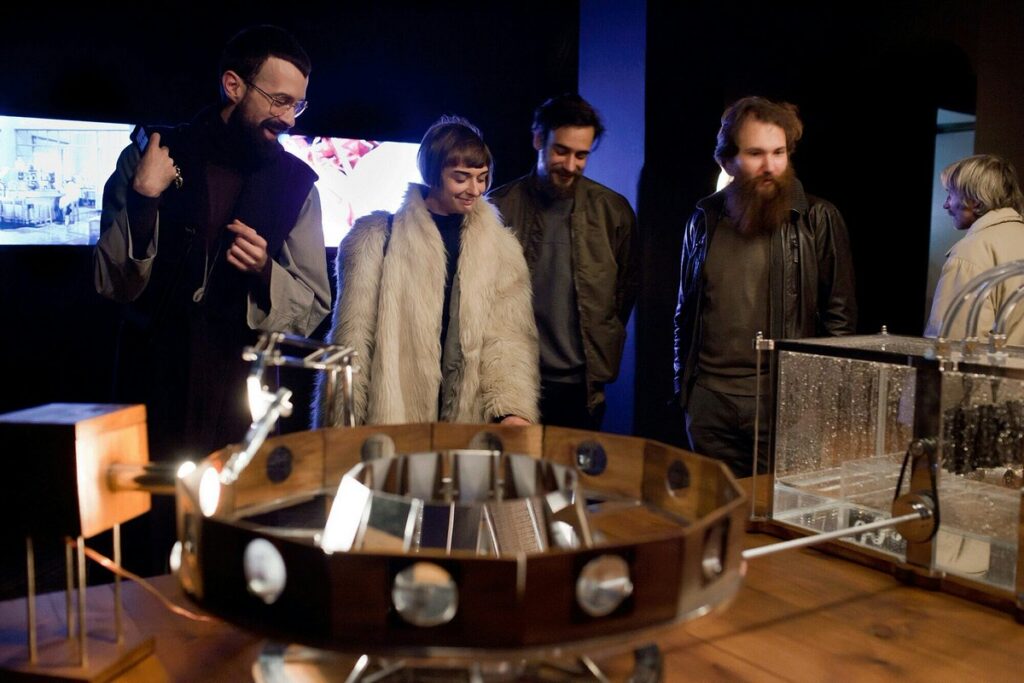
Bioart is a constantly evolving field. It has been driven largely by recent technological advances, but we have had it at our conference since the last decade. At Technarte 2018, OPN Studio presented the project ‘Give my Creation…Life!’, an interactive bioart and technology installation that explores mechanical autonomy powered by biological energy. The project reverses the usual biomedical paradigm, in which machines sustain organic life. Here, the kinetic energy of an isolated, beating heart muscle powers a synthetic machine and grants it operational autonomy.
The installation is accompanied by archive material on historical experiments in extracorporeal circulation, and functions as a critical inquiry into bioethics, tissue engineering and the philosophical implications of a ‘bodyless organ’ serving as a source of energy for technology.
At Technarte 2023, Taylor Hokanson also exhibited the work ‘Fine With This: an Internet-Controlled Flaming Sculpture’. The piece consists of monumental cast-iron letters spelling out its title, which burn continuously. Via a Twitch video chat, the audience can instruct the sculpture to shoot out huge flames, meaning the work can be experienced both physically and virtually. Inspired by meme culture and global calamity, it prompts a conversation about armchair activism and the tangible impact that internet culture can have on real-world events.
The two works are different, but they share a common characteristic of great visual and ethical power: both place a real physical and biological process at the heart of the piece, and use technology to question our relationship with it.
What can we expect from Technarte 2027?
Bioart is one of the areas that make up the Technarte programme, alongside Artificial Intelligence, robotic art, generative art, data art and many other disciplines in which art and technology come together to produce truly innovative and spectacular works. Each edition demonstrates that the most interesting projects tend to emerge where different fields begin to engage in dialogue with one another.
We will soon be announcing the Technarte 2027 programme and opening ticket sales. Follow us on Instagram, X and LinkedIn to stay up to date with the latest news and discover what the next edition has in store for us.