Fashion has always been closely linked to experimentation with new materials, shapes and manufacturing processes. In recent years, the incorporation of technologies such as 3D printing, smart textiles and wearable devices has expanded the creative possibilities of the industry even further. Technology is no longer limited to facilitating the production of a garment: it can also become part of its design and functionality.
Technology Applied to Fashion
3D printing is an additive manufacturing process that makes it possible to create objects from digital models. When applied to fashion, this technology enables the development of garments, accessories and structures with shapes that would be difficult to achieve using traditional methods.
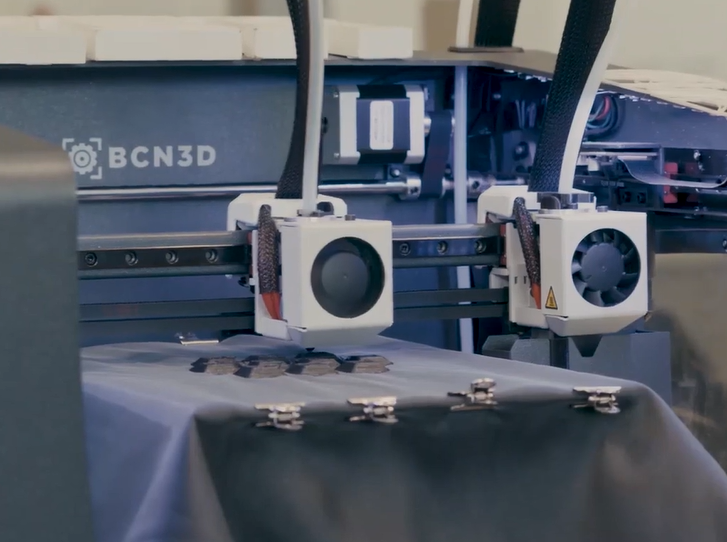
But the relationship between technology and fashion goes far beyond 3D printing. Fashion technology also encompasses wearables, smart textiles, materials that respond to stimuli (such as a garment changing colour when it gets wet), digital design, 3D scanning and other technologies that are transforming the way garments are designed, manufactured and experienced.
In this context, clothing can become an interface. It can incorporate sensors, respond to its surroundings, collect information or interact with the person wearing it. The boundaries between fashion, art and technology are therefore becoming increasingly difficult to define.
Fashion and Technology at Technarte
The theme of “fashion & technology” has been part of Technarte’s history for years. The conference has showcased projects in which manufacturing and emerging technologies are used to explore new forms of creation within the fashion sector.
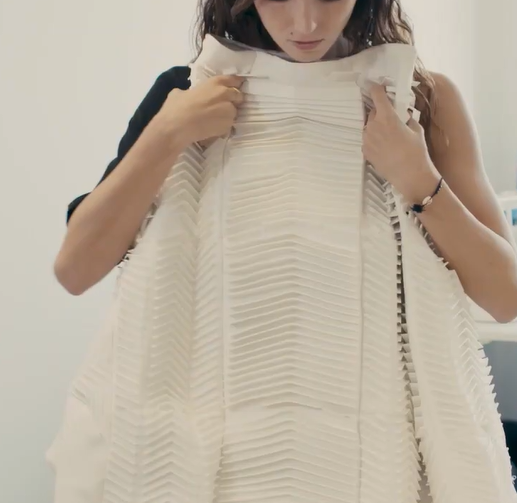
A particularly relevant example in the field of 3D printing is ZER Collection, presented at Technarte Bilbao 2019. The brand, founded by designers Ane Castro and Núria Costa, presented its “Digital Manufactured Fashion” project that year, a proposal that uses 3D printing and automated embroidery to create garments without waste. The project aimed to produce fabric directly through digital manufacturing, reducing material waste while maintaining the properties of conventional textiles.
Technarte has also featured designers such as Asher Levine, whose practice combines fashion, textile innovation and digital technology. Specialising in leather, synthetic materials and new manufacturing techniques, Levine explores how technology can transform design and production processes. His work has also reached the music industry, where he has created designs for artists including Lady Gaga, Demi Lovato, Taylor Swift, Bruno Mars, Rita Ora and The Black Eyed Peas, among others. At Technarte Los Angeles 2017, he presented “AL Catalyst”, an initiative focused on wearable products and new manufacturing techniques.

The exploration of fashion technology has also been present through wearable projects. In 2024, Technarte featured Kate Reed, an independent designer and researcher based in Boston who connects people, computers and the natural world through wearable interfaces. Reed has designed, developed and built hundreds of wearable devices since creating her first prototype at the age of 13. At Technarte, she presented “Digital Darwinism”, a project that proposes a multispecies metaverse in which digital twins and other technologies can help document and preserve biodiversity, using natural processes as a source of inspiration for addressing human challenges.
Call for Papers: Technarte 2027
Technarte is looking for artists, researchers, designers and technologists developing projects that explore new relationships between art, science and technology. The call for papers for the 2027 edition is open until 15 October 2026, and the event will take place on 21 May 2027 in Bilbao.
Fashion and technology are just one of the many areas through which this relationship can be explored. Technarte is looking for artistic projects that use technology as a tool, medium or essential part of their proposal, whether through artificial intelligence, generative art, data, robotics, interactive architecture, bioart, new media or human-computer interaction, among other areas of contemporary creation.