Martina Moon Zelenika is a renowned Croatian transdisciplinary artist whose practice unfolds at the intersection of drawing, sound, data, and emerging technologies. Working across installation, performance, video, generative and digital media, and augmented reality, she positions traditional drawing as a foundational matrix. Her work frequently incorporates the sonification of X-ray analyses, biosignals, satellite transmissions, and geophysical phenomena, including the Earth’s magnetosphere.
Zelenika has produced over thirty solo exhibitions and has participated in numerous international exhibitions, festivals, and conferences dedicated to art, science, and new media across Europe and South Korea. She graduated from the Academy of Fine Arts, University of Zagreb (BFA/MFA), and holds an MA from the Academy of Fine Arts and Design, University of Ljubljana.
ChORUS2
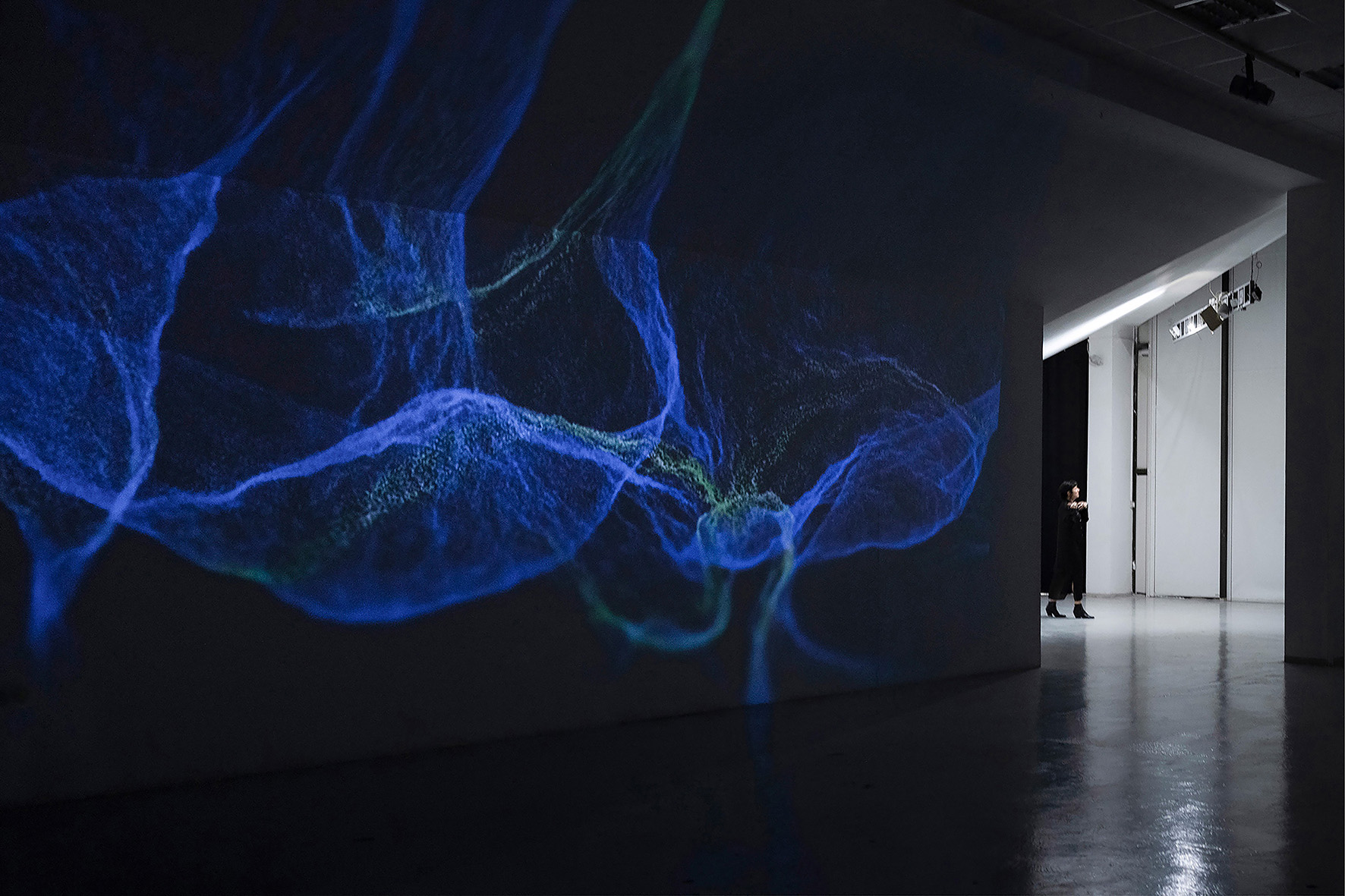
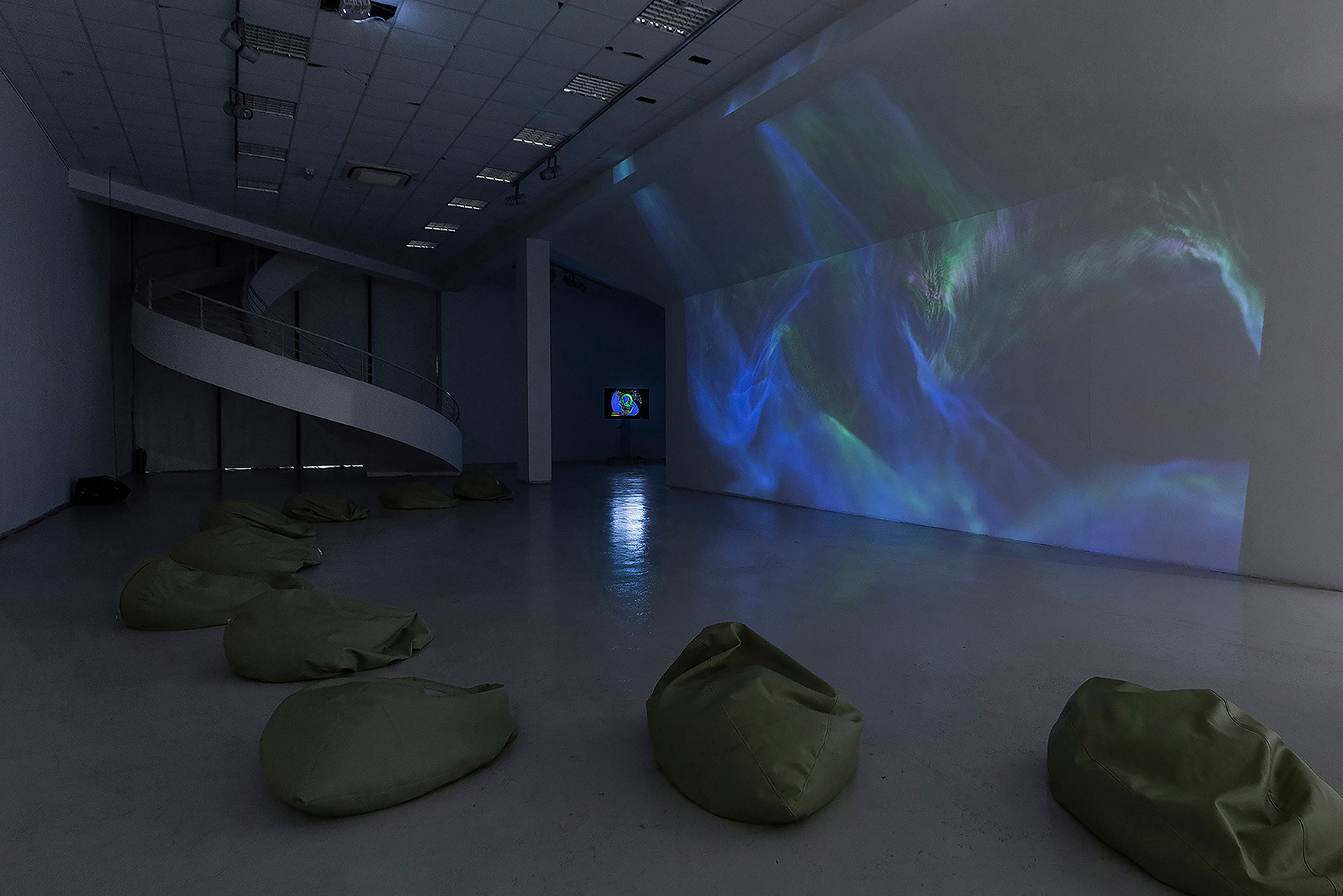
ChORUS2 is an audiovisual art project that translates real-time geomagnetic data into sound and moving image, foregrounding the invisible ecological forces that continuously shape life on Earth. Drawing on live data streams from the ACE satellite magnetometer, the work tracks fluctuations in the Earth’s magnetic field and its dynamic relationship with solar wind generated by solar eruptions. These planetary-scale interactions—normally imperceptible to human senses—are rendered audible and visible through a process of double translation: from physical measurement to digital data, and from data to immersive sound and visual form. The project unfolds as a distributed ecological system.
Data refreshed every minute travels from Earth into space and back again, emphasising the reciprocity between terrestrial and extraterrestrial environments. While the initial measurement is carried out by satellite instrumentation, the second phase of translation is performed by the artist through the custom software ChORUS2 and audio-reactive visualisations. The resulting composition consists of layered sound frequencies—ranging from low resonant tones to high-pitched signals—paired with fluid, particle-based animations reminiscent of auroral phenomena.